Information as aid 2.0: lessons from Lebanon, Sudan and Myanmar
Across crises today, information is both a lifeline and a weapon.
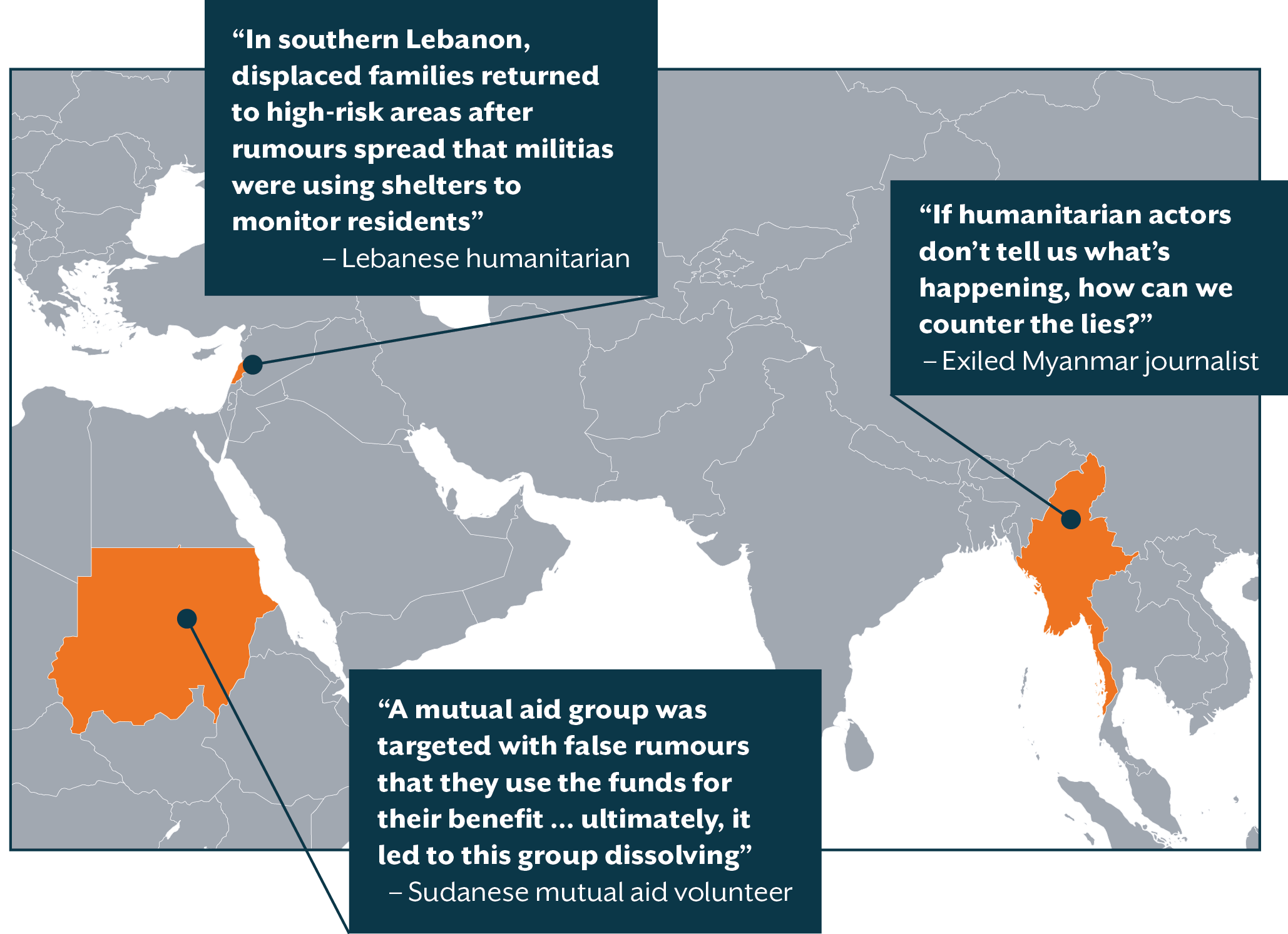
CDAC Network’s work in Lebanon, Sudan and Myanmar in 2025, complemented by consultations with practitioners working in Gaza and Ukraine, shows a consistent pattern: when trusted information breaks down, humanitarian outcomes deteriorate.
People still make life or death decisions. But they do so based on rumours, incomplete updates or deliberately misleading narratives. In these conditions, aid access, movement and perceptions of risk are shaped as much by information as by material needs.
The concept of ‘information as aid’, introduced over 20 years ago, recognised that people need reliable information to access assistance and make decisions. That insight remains valid, but the context has changed. Reliable information is no longer only scarce: it is actively manipulated. Information operates as a domain of conflict, shaping access, legitimacy and safety.
Across the three crises we studied and multiple information ecosystems, harmful information was not a side-effect of crisis but a structural threat to protection, access and accountability.
Four major trends emerged from our cross-country work:
Trust is infrastructure. People act on information from sources they trust, not those that are most accurate or official. Without trusted channels, even accurate information fails.
Silence is never neutral. When institutions delay or avoid communication, rumours and disinformation fill the vacuum. In fast-moving crises, absence of information is itself harmful.
Local actors can reduce harm. When communities and local networks have the capacity to interpret and verify information, harmful narratives lose traction. These actors already function as frontline responders in the information environment.
Global measures fall short. Existing regulatory frameworks and tools are designed for stable, high-income contexts. They do not adequately protect populations in crisis settings, where language gaps, weak moderation and political dynamics increase exposure to harm.
Together, these findings point to the urgent need to change the way we think about information in a crisis response. Information should be treated not as a communications tool but fundamental to all humanitarian objectives.
Humanitarian systems must therefore evolve to support information integrity in the same way they ensure access to food, water and shelter. To move in that direction, CDAC recommends four shifts:
Treat information integrity as vital and interdependent with other goals of humanitarian assistance.
Fund and connect local communication and verification networks.
Bridge humanitarian and media ecosystems through a mutual understanding of their roles in ensuring information integrity in crises.
Push for inclusive global information integrity governance and tools that allow crisis-affected people to navigate information disorder and hold power to account.
What good might look like
In the crises of the future, trusted information reaches people early, before uncertainty and misinformation take hold. When danger shifts, aid is delayed or rumours spread, communities have instant access to timely updates from voices they recognise, in languages they understand, through channels they already use. Changes in public sentiment, emerging hostility and misleading narratives are detected and addressed before they escalate into fear, exclusion or violence.
Governments and humanitarian organisations communicate proactively and transparently. They explain what is known, what is uncertain and how decisions are made, while adapting their approach to local contexts and digital cultures. Communities, local journalists and civil society actors are treated not as audiences, but as partners in sense-making, verification and follow-up.
Commitment to information integrity is embedded across humanitarian action. Rather than being confined to a single function or team, it informs security risk management, access negotiations, programming decisions and accountability processes. Insights from digital and community spaces shape risk analysis and real-time response adaptation.
Journalists, technologists and humanitarians work together with shared purpose and clear ethical boundaries. Information is no longer an afterthought or a liability to be managed, but a shared responsibility that safeguards dignity, reinforces humanitarian legitimacy and helps communities reclaim agency.