Tipsheet: Detecting and responding to inauthentic network behaviour

Inauthentic networks use coordinated fake social media accounts, bots and mass engagement tactics to manipulate and amplify narratives at scale. This tipsheet explains how humanitarians can identify coordinated inauthentic network behaviour, assess the risks and respond.
What is inauthentic network behaviour?
Inauthentic networks are coordinated groups of social media accounts that work together to artificially publish and amplify many thousands of posts designed to promote specific interests.
Networks can operate across platforms (Facebook, TikTok, etc.). They use a mix of tactics: ‘seeders’ (posting content), ‘spreaders’ (reposting content from their own network) and coordinated engagement (comments and likes) to influence the algorithms platforms use to promote certain content.
Note: inauthentic networks can also use bots to boost real posts from real people about events that really happened.
How do I spot an inauthentic network?
Look at patterns, not individual posts. Some indicators include:
Accounts created around the same time.
Multiple accounts posting the same or similar content around the same time.
Significant activity (posts/likes/comments) from outside of the local context (but be careful not to confuse this with diaspora engagement).
Note: Confirming inauthentic networks requires AI tools that use metadata (IP addresses, time stamps, etc.) to map and monitor network behaviour across platforms over time. This will increase levels of certainty about connections and affiliations, beyond what is visible within your own information environment.
What risks and harms should I watch for?
Information risk refers to the potential for negative impact if a narrative continues to circulate. Common indicators of risk in humanitarian contexts include:
Confusion about aid eligibility, targeting, locations or timing.
Growing distrust in humanitarian actors, partners or services.
Threats, violence or intimidation targeting humanitarian workers or communities.
Exclusion or targeting of specific groups due to narratives about identity, ethnicity or perceived affiliation.
How can I respond?
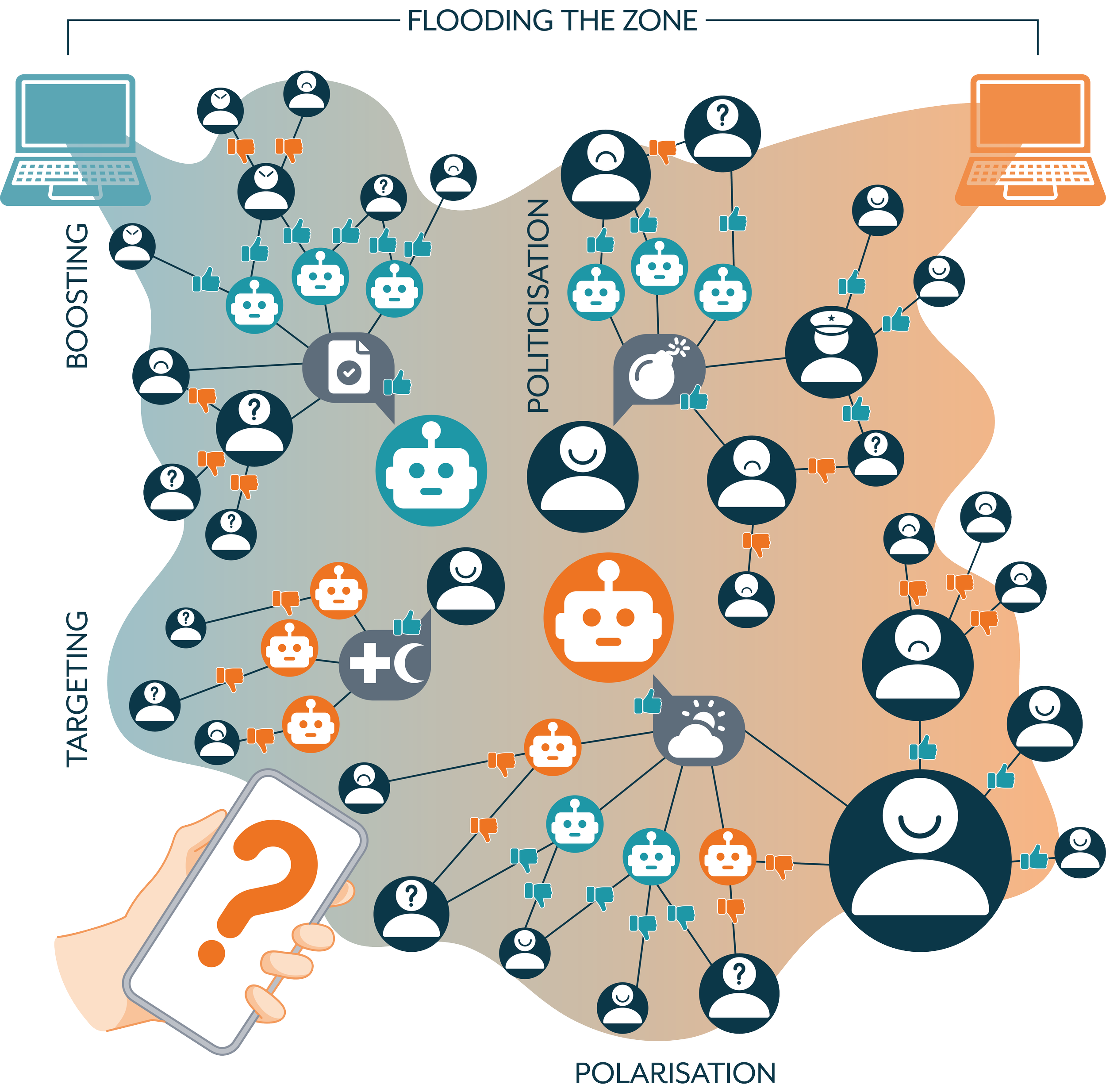
Network strategy: Flooding the zone (reducing visibility and access to locally relevant and reliable information)
What humanitarians can do:
Analyse
Monitor traction across networks and key ‘amplifiers’ in the ecosystem
Assess authentic versus inauthentic engagement to ‘weigh’ impact
Plan
Integrate community engagement and communication into operations
Collaborate with locally trusted communication channels
Communicate
Identify hyper-local, trusted channels and intermediaries
Use two-way communication to respond to concrete information needs
Network strategy: Fearmongering and hate speech (online to offline violence
What humanitarians can do:
Analyse
Watch for escalation – monitor shifts from generic to specific (people, places, dates) and reach
Plan
Have an escalation and referral plan built into social media monitoring activities and risk analysis tools
Have a mitigation plan to address possible online-to-offline violence
Ensure diversity in hiring, partnerships and community engagement activities
Communicate
Centre dignity and shared humanity in all communication
Network strategy: Boosting (pushing narratives and creating fake consensus)
What humanitarians can do:
Analyse
Identify narratives and potential intentions to anticipate possible real-world events
Plan
Combine online monitoring with real-world community engagement and qualitative data collection
Communicate
Focus on practical ‘news you can use’ rather than engaging with opinions
Emphasise diversity within communities
Network strategy: Politicisation (using real-world events to amplify success or vilify others)
What humanitarians can do:
Analyse
Analyse authenticity levels and identify narratives
Plan
Anticipate possible accusations and proactively develop a communication strategy to address these
Communicate
Avoid over-focusing on specific incidents
Document and verify individual atrocities; communicate about the issues (not the specific case) and your response
Network strategy: Targeting (undermining trust and weakening community structures and support)
What humanitarians can do:
Analyse
Document narratives to inform community engagement and communication efforts
Plan
Integrate communication and community engagement into operational planning to build trust and optimise uptake of services
Communicate
Use hyper-local, two-way communication
Be transparent about how decisions are made, the mandate and its limitations